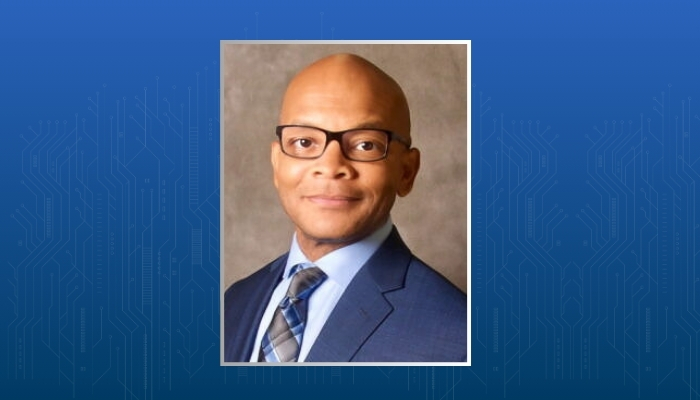


As Chief Technology Officer and Deputy Director of the Research Institute for Tactical Autonomy (RITA), Dr. Donnell Walton, helps shape the institute’s technical strategy and advance research toward real-world applications. Drawing on a career that spans academia, scientific research and industry, Walton brings a multidisciplinary perspective to RITA’s work at the intersection of emerging technology, government needs and research innovation. His leadership focuses on strengthening collaboration across the consortium, building connections with industry and developing pathways that move promising technologies from the laboratory to the field. In this RITA Spotlight, Walton discusses the future of tactical autonomy, the importance of turning research into action and preparing the next generation of engineers and scientists to contribute to rapidly evolving fields.
As RITA’s Chief Technology Officer and Deputy Director, what are your primary responsibilities, and how do you help shape the institute’s technical direction and priorities?
My primary responsibilities include setting RITA’s technical strategy and direction, recruiting talent to help us achieve our goals, and supporting operations.
You’ve worked across academia, research, and industry. How have those experiences shaped your approach to technical leadership at RITA?
Working at the nexus of these three domains has afforded me a unique perspective of working with customers, in our case the government, to define opportunities and requirements for technologies that don’t yet exist. We are developing processes that start at the laboratory level and ultimate culminate in the field. The challenge is to create systems that are robust and can deliver at operation tempo.
Having previously served on the faculty at Howard University, what does it mean to you to now help lead RITA and contribute to Howard’s leadership of the UARC?
Since this is the year of The Odyssey, it is a great honor to be able to come back to the location of my first professional appointment armed with the judgment forged by the many experiences and mistakes I’ve made and seen.
As CTO, how do you evaluate emerging technologies and research areas that could be important to RITA’s mission and the future of tactical autonomy?
The first step is to be aware of what’s happening in this extremely dynamic field. The second step is to understand the consortium’s current and emerging capabilities. The third step is to cultivate a high signal-to-noise level and figure out how to do experiments that will move us beyond the talking-doing gap.
Given your experience in industry, what opportunities do you see for strengthening connections between RITA’s academic research, industry, and the broader defense innovation ecosystem?
The executive director tasked me with standing up an industrial affiliates’ program that will facilitate companies working with the consortium by allowing us to streamline the requisite documentation and legal agreements. We are rolling this out now with the schools that chose to participate. We are also working on building awareness and capability around intellectual property creation and management.
What excites you most about the work currently underway at RITA or the direction the institute is headed?
Forging more alliances among the constituent universities, industry and the government is most exciting. Being able to define and participate in cutting edge research all while preparing the next generation of engineers and scientists is also exciting.
Workforce development is an important part of RITA’s mission. What skills or experiences do you think students and early-career researchers need to prepare for careers in autonomy and emerging technologies?
The previous evolutionary periods of mankind were defined by the tools that were created, not just used. Being able to make things is critically important. Being able to have the quantitative reasoning skills, curiosity and passion for learning are crucial.
Looking ahead, where do you see the greatest opportunities for RITA to make an impact over the next several years?
The greatest advantage and opportunity of this UARC is that it is comprised of US citizens. We are educating the next generation of citizens to make key contributions to the nation’s defense, security and economy, all while exploring and defining the frontiers of autonomy and physical AI systems.