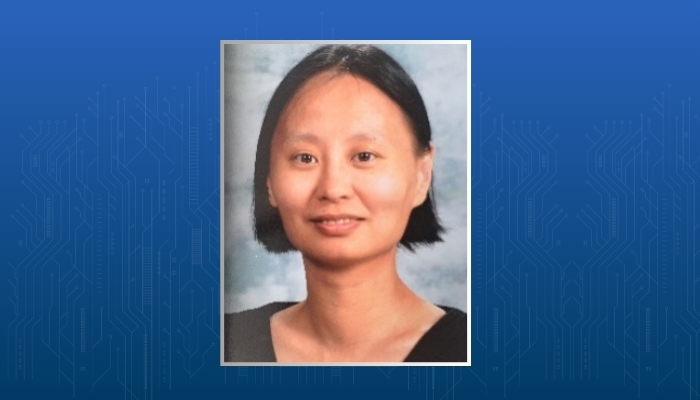



After two decades at Hampton University, RITA principal investigator, Dr. Qiang Le is beginning a new chapter as Chair of the Department of Electrical and Computer Engineering. The appointment marks both a personal milestone and an opportunity to help shape the future of engineering education through new academic programs, strategic growth, and student success.
For Dr. Le, engineering has always been rooted in strong fundamentals. Drawn to electrical engineering by an early aptitude for mathematics and encouragement from family, she has spent her career applying signal processing, machine learning, and sensor fusion to complex research challenges while preparing students for careers in a rapidly evolving field.
As a principal investigator within the Research Institute for Tactical Autonomy (RITA), Dr. Le values the opportunity to contribute to research that aligns with Hampton University’s mission while collaborating with researchers across the consortium.
Those collaborative experiences extend beyond research. Throughout projects supported by organizations including the National Science Foundation, NASA, and the U.S. Army, Dr. Le says she has developed a more open-minded approach to project management, mentorship, and time management. Those lessons continue to influence how she advises students and leads research teams.
Mentorship remains one of the most rewarding aspects of her career. Inspired by the curiosity and energy students bring to the classroom and laboratory, Dr. Le hopes every student leaves her mentorship with the confidence to become an independent, lifelong learner.
As department chair, Dr. Le’s priorities include expanding Hampton University’s engineering programs by building a systems engineering program, strengthening cyber-physical systems offerings, and increasing student enrollment. She is equally excited by the future of artificial intelligence and autonomy, embracing the uncertainty that comes with rapid technological change.
“You never know what life would look like in 10 years with the fast changing technology,” she says. “The uncertainty makes me excited about the future.”
For students considering careers in engineering, AI, or research, her advice is simple: keep learning and master the fundamentals. In fields that evolve as quickly as artificial intelligence, a commitment to continuous learning remains one of the most valuable skills an engineer can develop.