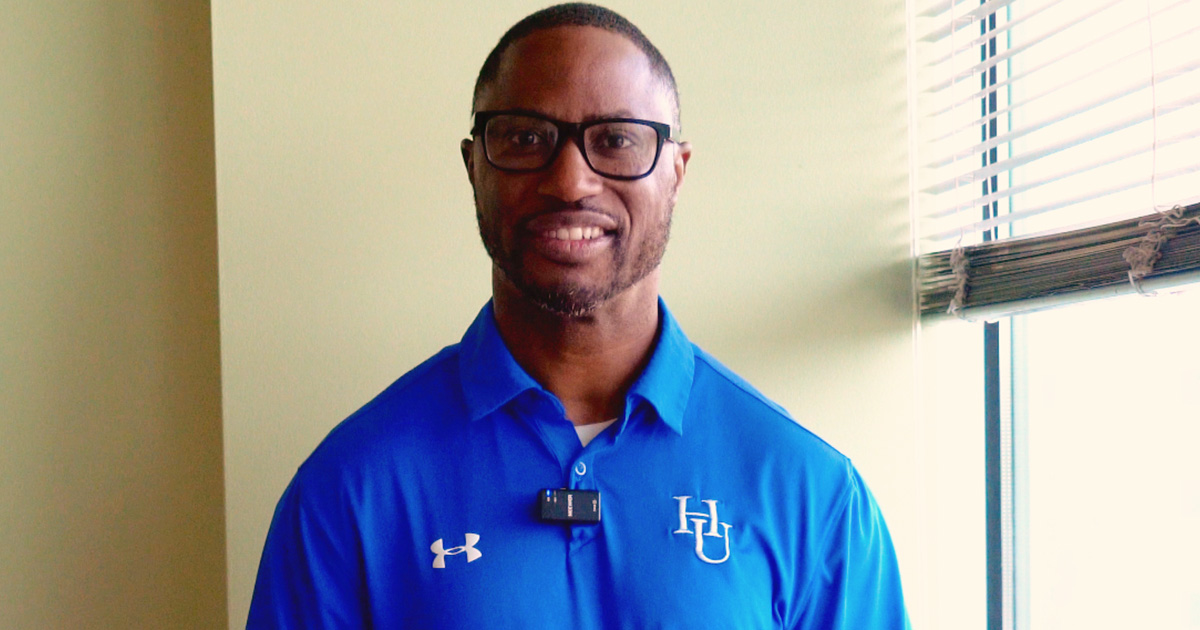



As Assistant Dean and Professor of Electrical and Computer Engineering at Hampton University’s School of Engineering & Architecture Division, Dr. Demetris Geddis brings deep expertise in electrical and computer engineering and a passion for mentorship. A first-generation college graduate, he found his path early through a love of math, science, and electricity and is committed to shaping the next generation of innovators contributing to tactical autonomy research.
Q: Can you share your name, school, and field of study?
Demetris Geddis: Hello. I’m Demetris Geddis. I serve as Assistant Dean for the School of Engineering & Architecture Division at Hampton University. I am an electrical and computer engineer by training.
Q: What inspired you to pursue your career?
I really didn’t have someone in my immediate family that inspired me to go into electrical engineering, but I had an electricity professor in high school who saw that I was doing very well in math and sciences and had a love for electricity. He pushed me towards electrical engineering.
Q: What brought you to RITA?
Serving as assistant dean, I had an opportunity early on to work with colleagues to help develop the RITA proposal. Given my background, interests in UAVs, and tactical autonomy, it was a great fit for Hampton University.
Hampton has a strong Electrical and Computer Engineering Department, as well as an Aviation Department and Atmospheric and Planetary Sciences Department. RITA was a great opportunity to bring the entire Hampton team together.
Q; What advice would you give students pursuing careers in STEM?
Continue pursuing the opportunities that come your way, especially when it comes to research. Not every experience will point you toward your final career, but it can help you decide whether it’s something you want to do. Those research experiences and internships are what help you recognize that you may have the talent and skills to truly flourish in STEM.
Q: What excites you about the future of this field?
When you look at tactical autonomy, especially with everything happening around the world involving drones, we hope to better understand how to manage these systems and develop the plans to address them. The work we’re doing now is going to be extremely impactful, more than we can even imagine.
Q: If someone was to ask why your work matters, what would you say?
Because engineers design and do things to make humanity better.